
When it comes to fascinating holiday traditions, Czech Easter gives Christmas a run for its peníze (i.e. money). From braided willow whips and elaborately painted eggs to green beer and lamb-shaped cakes, Easter in the Czech Republic is unlike anything you’ll experience elsewhere in Europe and there’s no better way to dive into the culture than through its food.
Whether you’re visiting Prague over the Easter weekend or simply curious about Czech culture, here are 12 fascinating facts about Czech Easter traditions.
Easter 2026 in the Czech Republic: Key Dates
- Good Friday (Velký pátek): April 3, 2026 — Public holiday
- Holy Saturday (Bílá sobota): April 4, 2026
- Easter Sunday (Velikonoční neděle): April 5, 2026
- Easter Monday (Velikonoční pondělí): April 6, 2026 — Public holiday and the biggest celebration day
- Prague Easter Markets: Typically run from mid-March through Easter week at Old Town Square and Wenceslas Square
1. Is it Easter… or a celebration of spring?
Velikonoce (Easter) comes from the expression velká noc meaning “great night” after the day in which Jesus Christ rose from the dead. During Communist rule, however, the religious celebration was suppressed and the arrival of spring was recognized instead. Since the Velvet Revolution and the collapse of Communism in 1989, Easter’s Christian roots have slowly been reestablished, though the holiday is still less overtly religious than visitors might expect (at least in the case in the capital city).

2. Easter Monday trumps Easter Sunday
While Easter Sunday is important in most Christian countries, in the Czech Republic, Easter Monday is the main event — and it’s an official public holiday. Easter Sunday is typically spent preparing: women decorate eggs while men prepare their pomlázky (braided whips). The real festivities kick off Monday morning.
3. The pomlázka tradition: whipping as a spring ritual
Pomlázky are braided whips made from pussy-willow twigs and decorated with colourful ribbons. On Easter Monday morning, boys and men traditionally go house to house, gently tapping girls and women with the whip while chanting a rhyme — “Hody, hody doprovody, dejte vejce malovaný…” — requesting decorated eggs in return.
The word pomlázka comes from the verb pomladit, meaning “to make younger.” The tradition is rooted in a pre-Christian fertility ritual: the fresh willow symbolizes the energy of spring, and being whipped was believed to bring health, youth, and fertility for the coming year.
The first written records of the custom date back to the 14th century, though it’s likely much older.
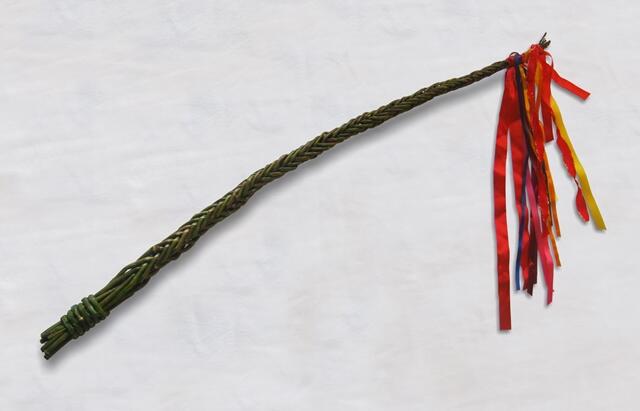
It’s worth noting that the pomlázka tradition is increasingly debated in the Czech Republic, especially in cities. While it remains part of village life and community gatherings — where men visit from house to house, stopping for a chat and a drink with each family — many women in urban areas consider the practice outdated or offensive in its symbolism. The tradition is noticeably declining in Prague and other larger cities, though it’s still very much alive in rural Moravia and Bohemia.
For visitors, you’ll see the colourful braided pomlázky for sale at Easter markets throughout Prague — they make unique souvenirs whether or not you plan to use them.
4. Decorated eggs are given to the whip bearers!
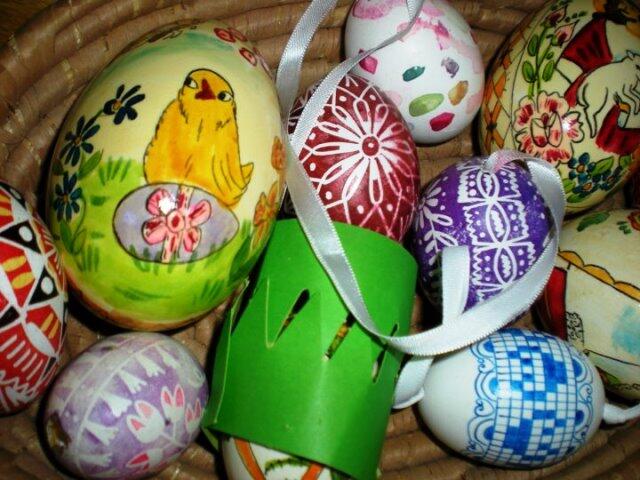
Decorating Easter eggs (kraslice) is one of the Czech Republic’s most beloved and widely practiced traditions. Women and girls decorate eggs to hang in windows, display in baskets, or give to the boys who visit on Easter Monday.
The techniques range from simple to breathtakingly intricate: eggs are painted, dyed with onion peel and other natural colours, etched, decorated with beeswax, wrapped in wire, perforated to look like delicate lace, or adorned with tiny pieces of straw. Some methods are specific to particular regions and families, passed down through generations. The most elaborate eggs can take days to complete.
You’ll find beautiful kraslice for sale at food markets and shops throughout the Czech Republic. If you’re taking one home as a souvenir, wrap it carefully — they’re very fragile.
5. Red is the symbolic color at Easter
While kraslice come in every colour imaginable today, red is traditionally the most important Easter colour in the Czech Republic. It symbolizes the energy of new life that comes with spring — health, happiness, and vitality. Some Czechs still wear red at Eastertime to welcome the season.
6. Green Thursday means green beer
On Zelený čtvrtek (Green Thursday), the tradition was historically to eat only green food — spinach, herbs, nettles, and other spring vegetables. Czech breweries have taken this a step further by producing zelené pivo (green beer) for the occasion, naturally coloured with herbs or young wheat.
If you’re in Prague during the Thursday before Easter, you’ll find green beer on tap at many pubs and restaurants. It’s become one of the more enjoyable modern additions to Czech Easter traditions.
7. Lamb is the most popular dish on the Easter menu
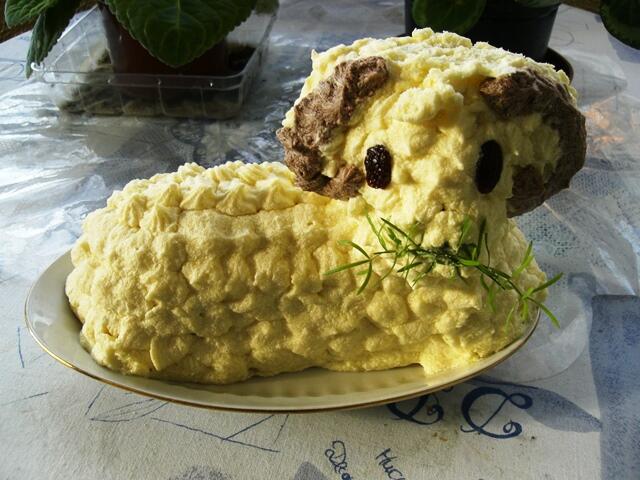
Lamb — whether actual meat or the sweet cake version — is the most recognized part of the Czech Easter table. The beránek is a sweet sponge cake baked in a lamb-shaped mould, often dusted with powdered sugar. It’s the single most iconic Czech Easter food.
Beyond the lamb, the traditional Easter spread includes:
- Mazanec — a sweet yeasted bread made with rum-soaked raisins, almonds, and lemon zest, marked with a cross on top. It’s the Czech answer to Italy’s colomba or Britain’s hot cross buns.
- Nádivka — a savoury Easter stuffing made with bread, eggs, nettles, and smoked meat.
- Hard-boiled eggs — naturally dyed and served alongside the feast.
- Slivovice — homemade plum brandy, especially in Moravian households. Not for the faint-hearted.
8. Nádivka is not to be missed!
Lamb might be the most popular Czech Easter dish, but Nádivka (a “stuffing” dish made with nettles) should be high on your list of traditional Easter eats!
Prepared on Holy Saturday with lots of eggs, green herbs, and smoked meat, it used to be part of the food basket that was taken to church to be blessed.
The stuffing is a kind of tribute to nature, awakening after a long, cold winter. Many wild green herbs begin to grow in the spring, and one in particular herb is everywhere. It’s the stinging nettle (kopřiva), often seen as a weed growing in ditches.
Eva, Eating Europe Prague’s manager, still has “fond” childhood memories of picking nettles without wearing gloves…and while some consider that a good way to beat arthritis, she tell us that some protection definitely helps makes the process less painful!
But how do you avoid getting stung by nettles when you cook? Eva will share this tip with you:
“Either steaming (my preferred method) or blanching the nettles for one to two minutes will remove the sting. Then, remove the nettles from boiling water and place in a bowl of ice water to retain the bright green color. However, for the less adventurous, you can also replace it with fresh baby spinach” she laughs!
9. Prague’s Easter Markets are a feast for the senses
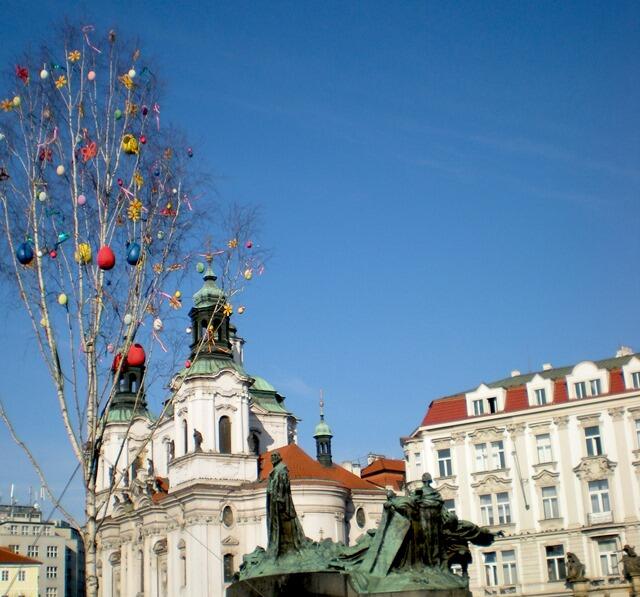
Prague’s Easter markets (Velikonoční trhy) are among the most charming in Central Europe. The largest markets set up at Old Town Square and Wenceslas Square, typically running from mid-March through the week after Easter.
Expect wooden stalls selling hand-painted eggs, braided pomlázky, handmade crafts, beeswax candles, and traditional puppets. The food stalls are equally tempting: trdelník (chimney cakes), grilled sausages, langos (fried dough), medovina (honey wine), and of course Czech beer.
The centrepiece of the Old Town Square market is usually a large decorated Easter tree adorned with hand-painted eggs and ribbons. Live folk music, craft demonstrations (including egg painting), and performances add to the atmosphere.
Practical tip: The markets can get crowded on Easter weekend. Visit on a weekday morning for a more relaxed experience, or head to the smaller Náměstí Republiky market for fewer crowds.
10. Girls get their payback — with cold water
Here’s a fact many visitors don’t know: in some parts of the Czech Republic, the women get their turn. On Easter Tuesday (Úterý), it’s tradition for girls to go after the boys — often by dousing them with cold water. In some villages, girls go out with their own whips. It’s the equalizer to Monday’s pomlázka tradition, though it’s practiced less widely.
In the Moravian region, the water-dousing custom is particularly well-preserved, and the whole Easter Monday–Tuesday cycle becomes a community-wide social event with food, drink, and plenty of laughter.
11. Rattles replace church bells before Easter
One of the more atmospheric Czech Easter traditions happens on Good Friday and Holy Saturday, when church bells across the country fall silent — they’ve symbolically “flown to Rome.” In their place, boys walk through villages with wooden rattles and clappers (řehtačky), some small enough to be handheld, others mounted on wheelbarrows and loud enough to be heard across the valley.
The boys make their rounds at the times when bells would normally ring, and in return, they receive small gifts or coins. This tradition is especially well-preserved in smaller towns and the Moravian countryside.
12. Moravia is where you’ll find the deepest traditions
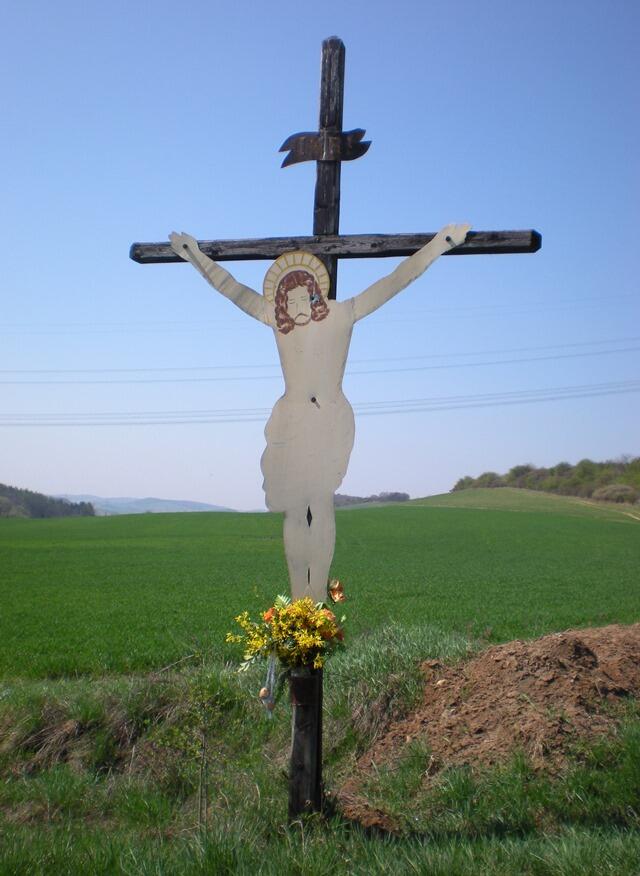
While Prague offers beautiful Easter markets and a festive atmosphere, the most authentic Czech Easter traditions are found in the Moravian region — the southeastern part of the country. Villages like those around Slovácko and the White Carpathians still celebrate Easter with folk costumes, community processions, traditional music, and customs that have been practiced for centuries.
If you’re in the Czech Republic over Easter and want to see traditions at their most genuine, consider a day trip to Moravia. The combination of folk culture, rolling vineyards, and warm hospitality makes it an experience you won’t forget.
Important spiritual sites for Easter pilgrimage include Holy Mountain in Příbram, the Roman Catholic parish in Velehrad, and the UNESCO-listed Zelená hora near Žďár nad Sázavou.
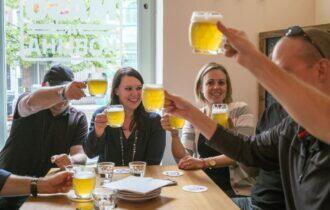
Prague Food & Beer Tour: Special 10 Year Anniversary Edition
Dine in the same cafe as Albert Einstein and meet the local vendors keeping the city’s food traditions alive. Explore the mysterious history of Prague through its cuisine.
- Daily
- 3.5 Hours
- Small Group
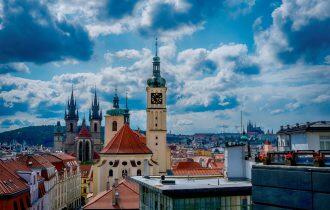
A magical evening in a side of Prague that most people miss.
- Daily
- 4 Hours
- Private tour